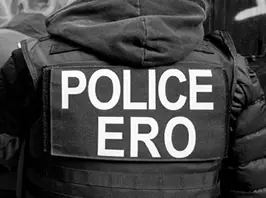
Reviewed against the U.S. Conference of Mayors March 3, 2026 statement, the linked DHS reform resolution, the January 22, 2026 U.S. Conference of Mayors and Major Cities Chiefs Association statement, the DHS January 20, 2025 memorandum on enforcement actions in or near protected areas, and ICE Directive 19010.3 on body-worn cameras reviewed April 11, 2026.
Quick answer
The mayors’ DHS reform resolution is best read as a city-facing enforcement checklist. It is not a final DHS rule, not enacted legislation, and not proof that every requested standard is already in force. Its value is that it translates a broad complaint about federal immigration enforcement into a list of operational changes that city leaders want to see in identification, cameras, warrants, records, protected settings, training, and accountability.
That means the right reader question is not “did this resolution instantly change federal law?” The better question is “if federal agencies adopted this checklist, what would become more visible, more reviewable, and easier for cities to explain after an enforcement event?” This page stays in that checklist lane. If you need the comparison logic behind the benchmark, use Why Mayors Compare DHS Enforcement to Local Police Standards. If you need the broader city-governance burden, use Why Mayors Call Immigration Enforcement a Governance Issue.
State label for this page: benchmark plus public pressure, not final implementation. The resolution tells you what city leaders want federal agencies to change. It does not by itself prove DHS or ICE has adopted the entire checklist.
What the March 3 record proves, and what it does not prove
| Source or event | What it confirms | What it does not confirm by itself |
|---|---|---|
| January 22, 2026 mayors and police chiefs statement | Local leaders publicly urged federal law enforcement to model professionalism and care expected of local law enforcement. | It did not itself publish a full DHS operating rule or implementation calendar. |
| March 3, 2026 U.S. Conference of Mayors statement | The mayors publicly released the enforcement-reform and modernization benchmark package. | It did not by itself change DHS or ICE manuals, training, or enterprise-wide deployment conditions. |
| DHS January 20, 2025 protected-areas memo | Protected settings remain an active federal topic and the memo is effective immediately. | It does not preserve the October 27, 2021 bright-line protected-areas framework; it rescinded it and left broader discretion in place. |
| ICE Directive 19010.3 on body-worn cameras | Cameras are a live federal policy topic and covered ICE officers are required to use them where implemented. | It does not prove enterprise-wide camera deployment because the directive says broader implementation depends on appropriated funding. |
This table is the heart of the uncertainty UX. The resolution matters because it is specific enough to be read as a checklist rather than a vague protest. But the site should not flatten a checklist into a completed federal change. That is why the page keeps repeating the state label. A benchmark can be specific and still remain unimplemented.
The checklist at a glance: what the mayors want federal agencies to change
| Checklist area | What the resolution is trying to tighten | Who notices first if it changes |
|---|---|---|
| Agency and officer identification | The mayors want federal personnel to be legible to the public rather than hard to identify during or after an operation. | Residents, witnesses, city communications staff, and any local institution asked to explain the event later. |
| Body-worn and vehicle-camera coverage | The checklist pushes for a clearer and more reliable visual record of encounters, not just a promise that recording exists somewhere in the system. | Review staff, legal counsel, city leaders, and residents who need a usable account of what happened. |
| Judicial-warrant and entry practice | The mayors want clearer rules on entry and authority so public explanations do not rest on speculation after the fact. | Property occupants, schools, clinics, faith institutions, courts, and city counsel. |
| Evidence preservation and post-event review | The checklist favors a record that can survive challenge, not a one-day statement that cannot be checked later. | Complainants, public defenders, city attorneys, oversight offices, and reporters trying to verify the sequence. |
| Protected settings such as schools, hospitals, courts, and houses of worship | The mayors want a stronger and more legible federal standard for actions in places where trust and continuity matter immediately. | Families, patients, litigants, staff, and local leaders who must restore trust in those spaces. |
| Training, professionalism, and accountability | The checklist tries to convert a broad professionalism demand into operational expectations that agencies can train and review against. | Agency leadership, local partners, and residents who want something stronger than symbolic reassurance. |
| Health, safety, and accountability around detention-related facilities and conversions | The resolution reaches beyond the street encounter and into the downstream conditions cities worry about once enforcement moves into detention infrastructure. | Local executives, health systems, community organizations, and any city managing the fallout of facility expansion or conversion. |
The checklist is stronger than a generic “do better” resolution because it identifies the operational surfaces where legitimacy usually breaks down first. If identification is weak, the public cannot track accountability. If the camera record is partial, later review becomes uncertain. If protected-setting rules are hard to explain, local institutions absorb the trust damage. If entry standards are murky, city counsel and residents are left to fight over fragments after the event.
That is also why the current title changed. The older version read more like another generic explainer in the same cluster. The current title signals that this page is the checklist page. Readers looking for the benchmark logic should not have to guess. Readers looking for the checklist should not have to sift through a mostly rhetorical article to find it.
Where the current federal baseline overlaps with the checklist, and where it still falls short
The current source set shows partial overlap, not full adoption. Protected settings are not imaginary; DHS issued a January 20, 2025 memorandum on enforcement actions in or near protected areas. Cameras are not imaginary; ICE Directive 19010.3 requires body-worn camera use in covered areas of responsibility. Those are real policy surfaces, and they matter.
But the overlap is incomplete in exactly the places city readers care about most. The DHS memo rescinded the October 27, 2021 bright-line protected-areas framework and relied on officer discretion and commonsense, while saying further guidance may come later. The ICE camera directive requires camera use where implemented, but explicitly says enterprise-wide expansion depends on appropriated funding. In other words, the current federal baseline contains pieces of the checklist without yet proving a fully standardized city-facing regime.
That is why the mayors are pressing for something stronger than a scattered source trail. The checklist is an attempt to convert a patchwork of partial answers into a more stable public operating standard. From a site-architecture perspective, this is the section that separates this page from the comparison page. The comparison page explains why local-police language was chosen. This page explains how far the current federal record still sits from the checklist the mayors want to see.
If parts of the checklist were adopted, what could change first
| Rough implementation window | Most plausible early moves | Why readers should treat this as a possibility, not a confirmed schedule |
|---|---|---|
| 0 to 30 days after a real federal adoption step | Updated guidance language, training reminders, identification rules, and internal notice to field offices. | Those are usually easier to announce than to audit, so they should not be treated as proof of uniform field practice. |
| 30 to 90 days | Operational rollout questions would become visible: who is covered, what hardware or software is required, how records are stored, and what oversight path applies. | This is where budget, training, and systems capacity usually start limiting the practical pace of change. |
| 90 to 180 days and beyond | More complex items such as enterprise camera coverage, facility-related safeguards, and consistent protected-setting handling would become testable. | Longer windows often depend on procurement, funding, training, audit, and cross-agency implementation that cannot be assumed from a press release. |
That is why this article keeps bringing readers back to dates and document type. The checklist is useful precisely because it gives readers something to watch for later. If a future federal action arrives, this page can tell you whether the action was about guidance language, field practice, enterprise deployment, or something more limited. Without that framework, every update risks being overread as a full system change.
Who would feel the checklist changes first

The first affected group is not just the person directly targeted in an operation. It is the wider set of institutions that have to function after the event. Schools, hospitals, courts, houses of worship, city legal offices, communications teams, and local civic partners all need a baseline they can explain publicly. That is why the checklist spends so much energy on visibility, records, and protected settings rather than only on abstract policy language.
Residents would feel the change first in predictability. If identification is clearer and the record is stronger, the public story hardens faster and rumor has less room to dominate. City governments would feel it in explainability. They would have a cleaner way to brief the public after a contested event. Local institutions would feel it in continuity. A stronger protected-setting standard means staff can answer practical questions about whether a location still functions as expected without improvising a new theory every time a headline breaks.
This affected-group lens also improves internal relevance across the site. Readers who care most about city-side burden should continue to the governance backgrounder. Readers who care most about the public comparison benchmark should use the local-police standards explainer. Readers who want the editorial discipline behind those state labels should use the Methodology page.
Which checklist items are easiest to announce and hardest to operationalize
Some items are politically easy to support because they sound like professionalism in abstract form. It is relatively simple for public officials to endorse calm, professionalism, clearer identification, or more accountable records. The harder part is operationalizing those ideas across training, equipment, supervision, record retention, complaints, and field conditions that differ by office and geography.
Camera policy is the clearest example. ICE already has a current body-worn camera directive, which means the issue has moved past symbolism. But the same directive says broader implementation depends on appropriated funding. That is the difference between a live policy topic and a complete field-standard solution. Readers should apply the same skepticism to any later announcement that sounds complete before the deployment record is actually complete.
Protected settings are another difficult area. The January 20, 2025 DHS memo is effective immediately, but it replaced the prior October 27, 2021 protected-areas memo and returned significant reliance to officer discretion. For a city reader, that may be the central problem: a protected-setting issue is only partly solved if the city still cannot point residents to a stable and legible public standard after the event. The mayors’ checklist is pushing toward that stronger standard, but it has not yet proven that the standard exists in full.
That is why this page should age better than a reaction post. It is not trying to predict every future adoption step. It is giving readers a structure for deciding whether a later update changes field behavior, only changes language, or changes nothing practical at all.
What remains unresolved today
- Whether DHS or ICE will issue a new directive or guidance package that fully adopts the benchmarked identification, record, and protected-setting standards.
- Whether camera obligations will move from covered areas of responsibility toward a stronger enterprise-wide baseline.
- Whether the protected-settings question will be addressed with clearer, more durable public guidance than the January 20, 2025 memo currently provides.
- What funding, training, audit, or oversight mechanisms would be needed to make the checklist durable in real operations instead of symbolic in press language.
- How much of the broader mayoral package would require later federal legislation, rulemaking, or interagency process rather than only internal DHS or ICE guidance.
This uncertainty is not a flaw in the article. It is the article’s core honesty condition. The page is more useful when it tells readers exactly where adoption, funding, and implementation remain unsettled than when it pretends a benchmark document has already solved those steps.
How to tell whether a checklist item has moved from benchmark to real practice
Readers should ask for more than a headline saying an agency “responded.” A real movement from benchmark to practice usually leaves a trail: a directive or memorandum, defined coverage, an implementation date, training language, a record-retention or review rule, and some statement about how the change will be audited or funded. If those pieces are missing, the announcement may still matter politically, but it has not fully crossed into operational reality.
This matters because the checklist contains items with very different implementation difficulty. A public statement on professionalism can appear quickly. A change that requires hardware, training, storage, supervision, and audit takes longer. A strong reader should not score both events as if they were the same kind of adoption. That is why this page keeps pairing the checklist with the source trail and the sitewide uncertainty labels.
Use that discipline with any later update. Ask what document changed, who is covered, what date it applies from, what the agency says about compliance, and whether the change can be checked later by someone outside the agency press office. If those answers remain thin, the item probably still belongs in the benchmark lane rather than the settled-policy lane.
Use the rest of the archive without blurring this page’s role
- Why Mayors Compare DHS Enforcement to Local Police Standards for the benchmark logic.
- Why Mayors Call Immigration Enforcement a Governance Issue for the city-governance consequences.
- What the Mayors’ Immigration Modernization Resolution Would Change for the broader system-design branch of the same mayoral package.
- How to Read a Federal Enforcement Reform Plan for the method this site uses to separate benchmark, proposal, implementation, and law.
- Author / Team, Methodology, and Editorial Policy for the trust surfaces that explain how this site handles uncertainty and corrections.
This routing closes the duplicate-content problem more cleanly than another generic summary ever could. The benchmark page answers why the comparison exists. This page answers what the checklist contains and how to read its adoption gap. The governance page answers why cities keep carrying the burden. The method page answers how to label policy state honestly. That is a more defensible archive, a clearer user path, and a better AdSense posture than four nearly interchangeable summaries chasing the same search intent.